Sentence length is shot length
If your scenes cut roughly at sentence boundaries — and most editing approaches land close to that — then the rhythm of your prose becomes the rhythm of your edit. That link is why a good script can still feel flat on screen.
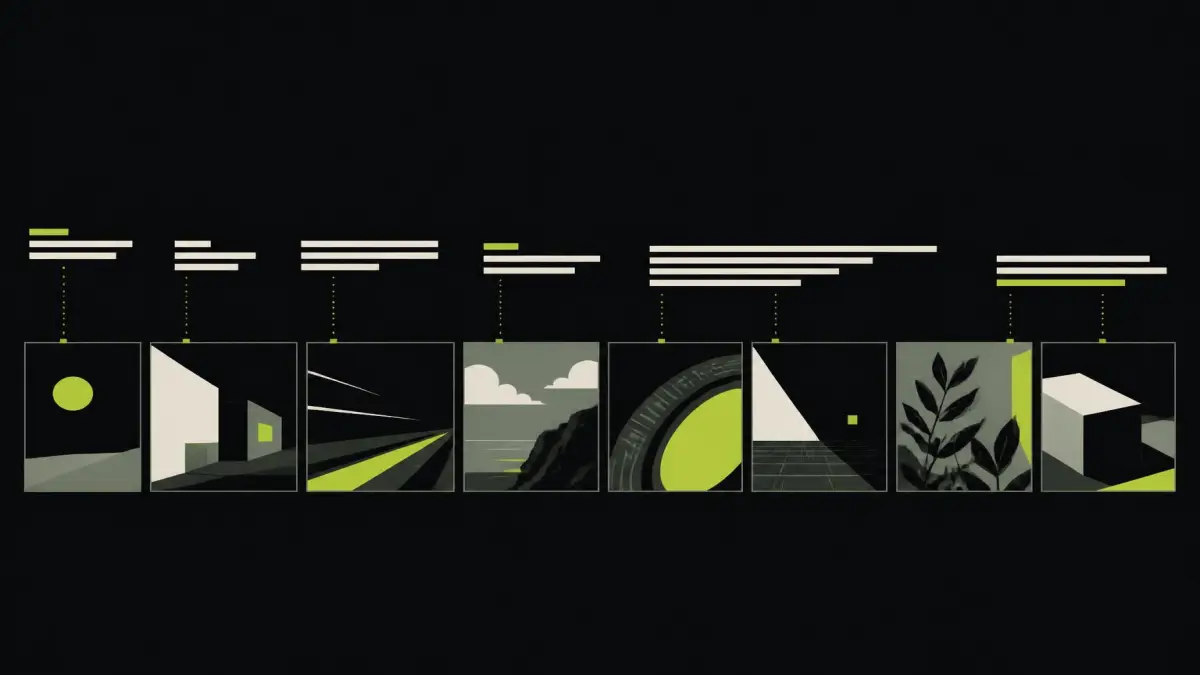
The mechanism
Video is cut at natural breaks in the narration, because cutting mid-clause looks like a mistake. A sentence therefore tends to correspond to a shot.
Which means: a run of six similar-length sentences produces six similar-length shots. The prose can be excellent and the result still reads as monotonous, because the *visual* rhythm never varies. Editors experience this as "the footage is boring" and try to fix it with more cuts, which does not work because the problem is upstream.
What to vary and where
Two registers, used deliberately.
- Short sentences and fragments become hard cuts. Use them at reveals, at turns, and on the beat right after a number lands.
- Longer sentences become held shots. Use them for mechanism and explanation, where the viewer needs a moment on one image anyway.
Two working rules: never put two long sentences next to each other, and break any run of three at similar length. Those two alone fix most of it.
The engineers had identified the problem in testing, and they had submitted a report recommending a delay, but the launch window was narrow and the decision was made to proceed on schedule despite the objections.
The engineers found it in testing. They wrote a report. They recommended a delay — and the launch window was narrow, the schedule was public, and the decision was made to go anyway.
Four shots instead of one, and the short ones land where the tension is.
Pacing is not speed
A common misreading: pacing means going faster. It does not — uniformly fast is as monotonous as uniformly slow, just more tiring.
Pacing is *variation*. A held shot only feels held because it follows quick ones. A hard cut only lands because something slower preceded it. Contrast does the work, and contrast requires both registers to be present.
The beat after a number
Worth its own note, because it is the most reliable single application of this.
When you state a figure that is supposed to be surprising, the next sentence should be short. It gives the number room to register, and it produces a cut immediately after the number appears on screen — which is where you want the visual emphasis anyway.
Bury the figure mid-paragraph followed by another long sentence and it passes unnoticed, no matter how striking it is.
Checking it
Read the draft and mark each sentence long, medium or short. Then look at the pattern rather than the words.
Long runs of one marking are where the video will drag. A stretch of unbroken medium is the most common and the hardest to notice by reading, because nothing about it is individually wrong.
How to write a YouTube script people actually finish
Most scripts fail the same way: they are correct, organised, and about their subject rather than inside it. Here is what to do instead.
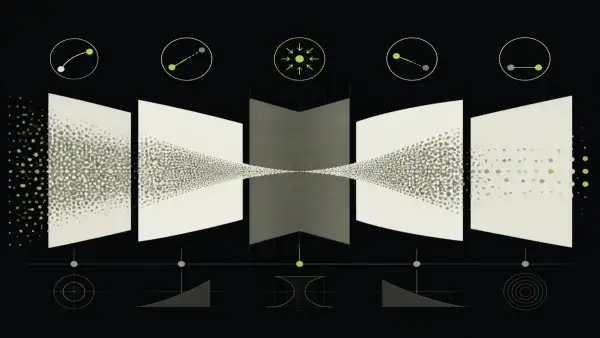
A structure for scripts that hold to the end
Five parts, what each one is for, and the specific place in the middle where most scripts quietly die.
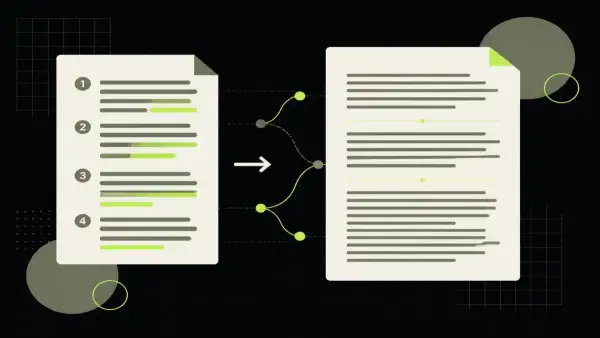
Writing for the ear, not the page
A script is going to be spoken. That changes the punctuation, the numbers, the sentence length and the vocabulary — and most drafts ignore all four.