How often should you post? The honest answer
The advice is always "be consistent", stated as though the platform rewards punctuality. It mostly does not. What frequency actually buys you is something else, and knowing which thing changes what cadence you should pick.
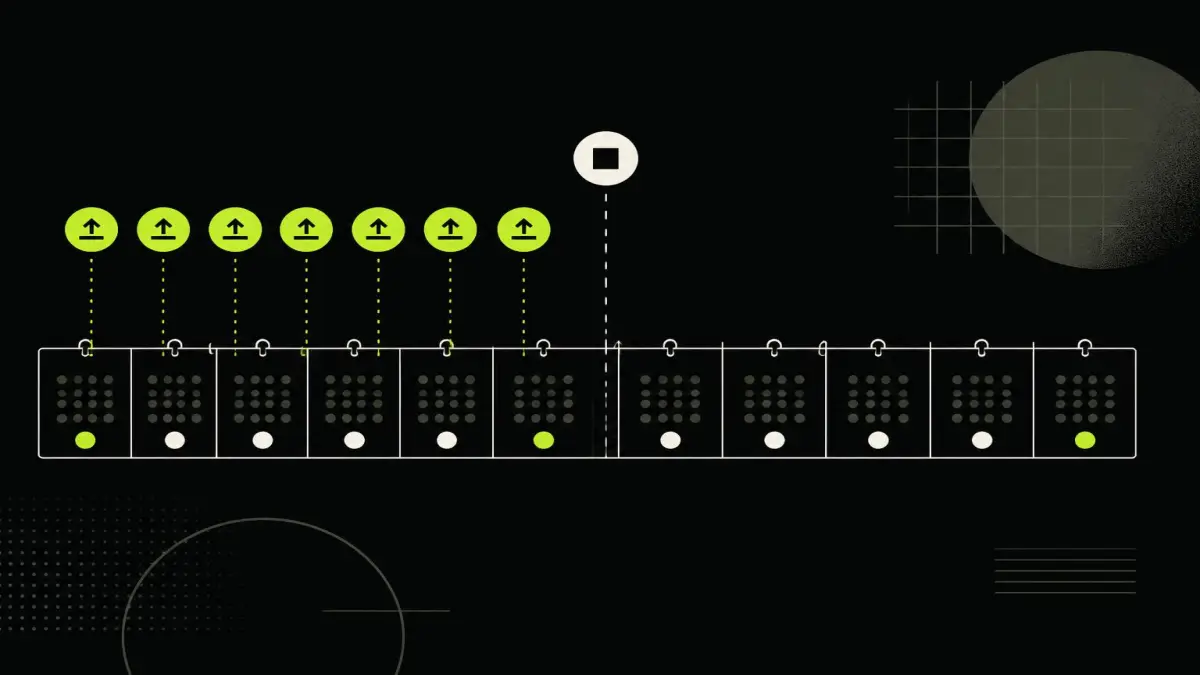
What frequency does not do
There is a persistent belief that uploading on a schedule is itself a ranking signal — that the system notices you post every Tuesday and rewards it. Treat this as unproven. Recommendation is driven overwhelmingly by whether individual videos hold the people who click them.
The practical evidence against the schedule theory is everywhere: channels that post erratically and grow, channels that post daily for a year and do not. If punctuality were the lever, neither would happen.
What it actually does
Three real things, none of which is a scheduling bonus.
- More attempts. Each video is a draw. Twenty draws beat five, not because the platform is counting but because you have more chances to find the thing that works.
- Faster learning. The gap between publishing and knowing whether it worked is where your improvement happens. A weekly cadence gives you fifty feedback cycles a year; monthly gives you twelve.
- A reason to return. Someone who liked a video and finds three more has a reason to subscribe. Finding one video and an empty channel, they do not.
All three are about volume and iteration, not timing. That reframes the question from "what day should I post" to "what rate can I hold without the quality dropping".
The cadence trap
The failure looks like this: someone commits to three videos a week, hits it for a month, and the fifth week produces something visibly rushed. The one after that is worse. By week eight they have stopped entirely.
This is worse than having posted monthly the whole time, and not only because they quit. The rushed videos are the ones that teach the recommendation system what your channel is — a run of weak videos actively makes it harder for the good ones to find an audience.
A cadence you can hold for a year beats a cadence you can hold for a month, even if the second one is three times faster.
How to pick yours
Time one video end to end, honestly — research, script, narration, edit, thumbnail, upload. Include the parts you would rather not count. Then take the rate that fits in the time you actually have, and halve it for the first two months.
You halve it because early videos take longer than you expect and because the estimate was optimistic. If you finish early, publish early. Missing a self-imposed deadline repeatedly is corrosive in a way that having spare time is not.
Where speed is worth buying
If cadence is the constraint, look at which stage actually eats the time. It is almost never the stage people try to optimise.
- Research and scripting is usually the largest block and the one worth protecting — it is where the video is won or lost.
- Editing and assembly is usually the largest block that can be compressed without hurting the result, since it is mechanical rather than creative.
- Thumbnails are fast but high-leverage, so the ratio of time to impact is the best on the list.
Compressing the mechanical stage is the honest way to raise cadence. Compressing research is how you end up with twenty generic videos.
Common questions
Does posting at a specific time of day matter?
Far less than the advice suggests. A video that holds attention gets recommended for months; one that does not is not saved by having gone up at the optimal hour. Post when it is ready.
Is it bad to take a break?
A gap does not delete a channel. Videos that were performing generally keep being recommended. What hurts is the pattern of stopping and restarting repeatedly, because it means the channel never accumulates enough consistent output to learn from.
Should I batch-produce videos?
Batching the mechanical stages works well. Batching the research and writing tends not to — the fourth script written in one sitting is usually noticeably worse than the first.

Faceless YouTube channels: what actually works, and what does not
What "faceless" really means, which formats survive without a presenter, and the three things that decide whether a channel like this grows.
What your first 20 videos are actually for
They are not for growth. They are for finding out what your channel is — and there is a specific way to make them count.
Is your channel failing, or just early? How to tell
A diagnostic. Which number to look at first, what each failure mode actually looks like, and the one case where the honest answer is that nothing is wrong yet.