Which faceless video formats hold attention (and which do not)
The formats that survive without a presenter all share one property: the visuals carry information rather than filling time. That single test predicts most of it.
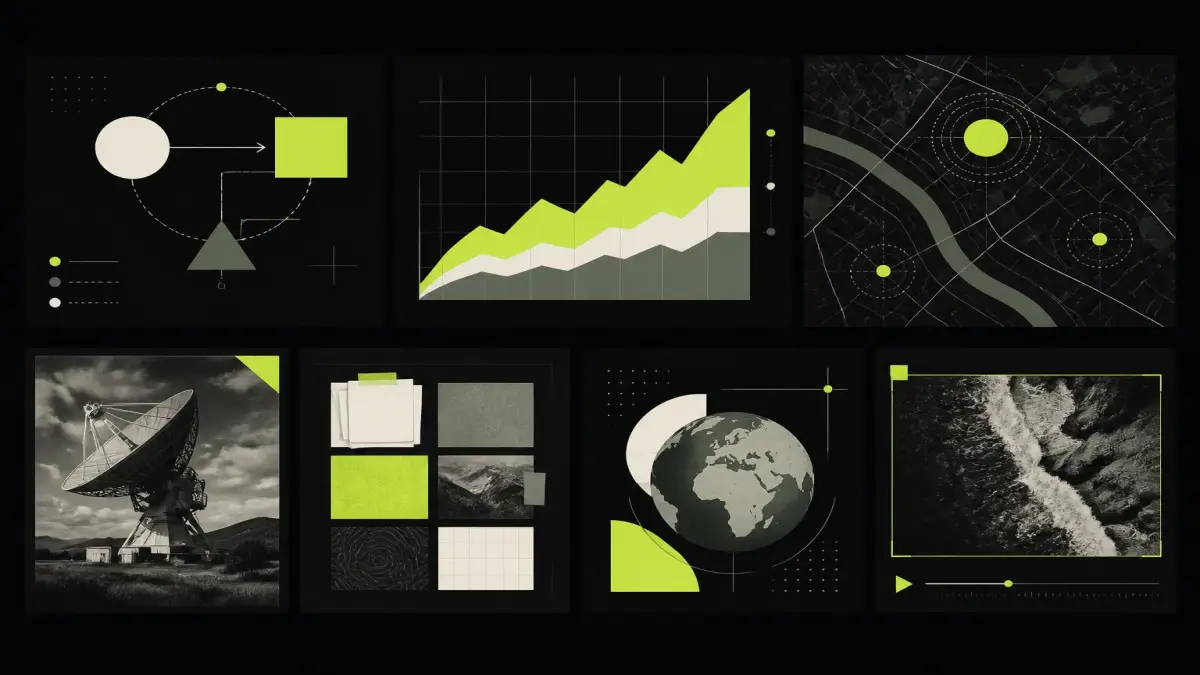
The test
Ask of any format: if you muted the narration, would the pictures still be telling you something?
For a diagram of how a jet engine works, yes. For a chart of prices over thirty years, yes. For a slow zoom on a stock photo of a person looking thoughtful while a voice discusses productivity, no — the picture is admitting there was nothing to show.
That is not a rule about production values. It is a rule about whether the topic was concrete enough to film in the first place.
Formats that work
Mechanism explainers
How something works, where a diagram does the explaining. Strong because the visual is genuinely load-bearing: you cannot explain a pressure differential in words as well as you can show it. Demands a script that has actually understood the mechanism, not one that has paraphrased a summary of it.
Documentary and case study
A real company, person, or event. The strongest faceless format, because archive photographs and real footage exist and are specific. Demands names and dates — this format collapses instantly into generic stock if the script says "a tech company in the nineties" instead of naming it.
Data and comparison
Where a chart is the argument. Works because a number on screen is doing something no narration can. Demands real figures you can source, and the discipline not to invent one because it would round nicely.
Process and walkthrough
Screen recordings, tutorials, teardowns. The screen is the subject, so the visual problem solves itself. Demands that you actually do the thing on camera — a walkthrough narrated over someone else's screenshots reads as exactly that.
Geography and place
Anything where a map is the through-line: trade routes, borders, infrastructure, why a city is where it is. Maps animate well and carry information densely.
Timeline and origin story
How something got from there to here. Structurally easy — chronology gives you the shape for free — which is also its risk: chronology is an *order*, not a *story*. Something has to change, not merely happen next.
Lists and countdowns
Weakest of the group and by far the most saturated, but structurally sound: each item is a natural chapter with its own small hook. Works when the items are genuinely surprising and fails when they are the same five things every other list has.
The format that almost always fails
Commentary and opinion with nothing to show. One person's take, narrated over unrelated b-roll.
On camera this format works fine — the presenter *is* the visual, and their reaction is the content. Remove them and there is nothing left to look at, so the edit fills the gap with footage that has no relationship to the words. Viewers read that immediately, even if they could not articulate why.
Pick one and repeat it
The formats above are not a menu to rotate through. A channel that publishes an explainer, then a countdown, then a case study is asking the viewer to re-learn what it is every time — and giving the algorithm nothing consistent to match against.
Pick the one that fits your niche and your appetite for research, then make twenty of them. Recognisability is most of what a faceless channel has instead of a face.
Common questions
Can I mix formats on one channel?
Eventually, once the channel has an established identity that the variation can sit inside. Early on it costs more than it gains: you are still teaching people what the channel is.
Which format is easiest to start with?
Case study or documentary, if you enjoy research — real subjects come with real images and specific facts, which solves the two hardest problems at once. Mechanism explainers are the hardest, because the diagram has to be right.
Faceless YouTube channels: what actually works, and what does not
What "faceless" really means, which formats survive without a presenter, and the three things that decide whether a channel like this grows.
Choosing a niche for a faceless channel
How to pick something to be about that has demand, that you can still stand in six months, and that you can actually get pictures for.
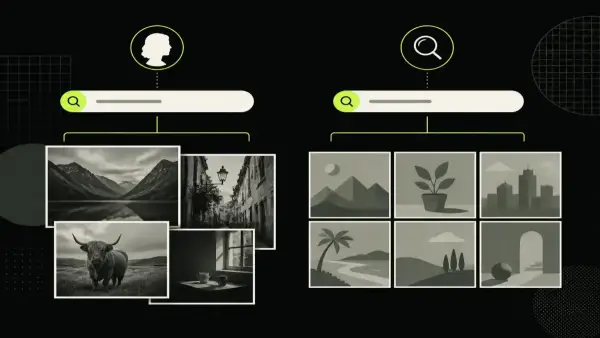
A vaguer script gives you worse pictures
On a faceless channel, generic writing has a second cost most people never connect to the script: it determines what you are able to put on screen.